top of page
a 501(c)3 non-profit org.
Home_x
Giving
Connect Here
Improv
Cinema Therapy
Veterans
Boys of Summer
Stephen King
Engage
Grow
Success Stories
Success Stories
Acceptance
Blog
Daily Dose
About
Contact
More
Use tab to navigate through the menu items.
Donate
YAX - check these out
YAX - check these out
Play Video
Share
Whole Channel
This Video
Facebook
Twitter
Pinterest
Tumblr
Copy Link
Link Copied
Search videos
Search video...
Now Playing
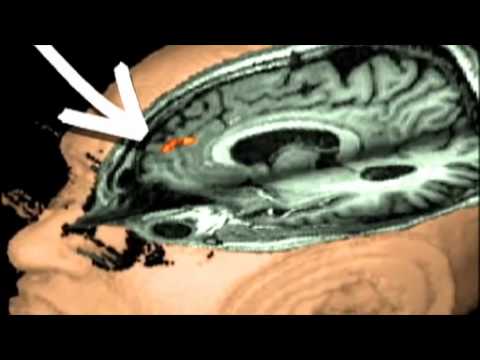
How Our Brains React When We Hear a Joke
07:12
Play Video
Now Playing
What makes things funny | Peter McGraw | TEDxBoulder
12:24
Play Video
Now Playing
NOVA scienceNOW : 1 - Mirror Neurons
13:51
Play Video
All Videos
Play Video
Play Video
31:32
Connection Is Medicine: Dr. Benzi Kluger on the Heart of Parkinson’s Care | Part 1
What if connection isn’t merely comforting—but an essential part of medicine? In Part One of this wide-ranging conversation, Dr. Robert Cochrane welcomes neurologist and neuropalliative-care pioneer Dr. Benzi Kluger to The Daily Dose of Dopamine. Benzi explains why the traditional biomedical model—focused primarily on disease, physiology and treatment—cannot fully account for the experience of the person living with Parkinson’s. Together, Robert and Benzi explore the biopsychosocial model, the therapeutic power of the clinician-patient relationship and the place of love, purpose and human connection in healthcare. Their conversation includes: • Why treating a body is different from caring for a person • How feeling seen and heard can become part of the treatment • Why purpose cannot be replaced by a pill • Social isolation and the loss of “social capital” after diagnosis • The role of families, faith communities and neighborhoods in healing • Why helping another person can restore meaning for the helper • How healthcare might extend beyond clinics and hospitals • The growing idea that Connection is Medicine Dr. Benzi Kluger is a professor of neurology and medicine and chief of neuropalliative care at the University of Rochester. His work focuses on whole-person care, quality of life and improving support for people living with serious neurological illness and their families. The Daily Dose of Dopamine explores Parkinson’s, creativity, community and what helps people live more fully. Learn more about Yes, And…X and Connection is Medicine at https://www.yesandx.org #ConnectionIsMedicine #ParkinsonsDisease #NeuropalliativeCare
Play Video
Play Video
22:09
Rock Climbing Is the Exercise. Connection Is the Medicine. | Upending Parkinson's
What happens when someone with Parkinson’s looks at a climbing wall and thinks, “There’s no way I can do that”? Sometimes, they climb it. On this Daily Dose of Dopamine, I talk with Molly Donelan-Cupka, founder of Upending Parkinson’s, about how a climbing program that began with one person with Parkinson’s in 2012 has grown into a community with roughly 80 locations — and is beginning to expand internationally. Molly shares why rock climbing may be uniquely suited to people living with Parkinson’s: big movements, intensity, strength, mobility, cognitive engagement and adaptability. But our conversation quickly moves beyond exercise. We talk about what happens when “I can’t” becomes “I’m a climber.” We talk about people seeing someone who looks like them doing something they thought was impossible. About climbers cheering each other on. About belonging to the group even on the days when you can’t climb. And about why community may ultimately be one of the most important parts of the entire experience. As Molly puts it, rock climbing changes people’s lives — and the community surrounding it is a huge part of why. It’s another powerful reminder of something I’ve become increasingly convinced of: Exercise is medicine. And connection is medicine, too. Learn more about Upending Parkinson’s: https://www.upendingparkinsons.org/about Learn more about Yes, And…X and Connection is Medicine: https://www.yesandx.org Subscribe for more Daily Dose of Dopamine conversations exploring Parkinson’s, creativity, community, identity and what it means to live well. #Parkinsons #UpendingParkinsons #RockClimbing #ConnectionIsMedicine #ExerciseIsMedicine #ParkinsonsDisease #DailyDoseOfDopamine
Play Video
Play Video
01:12:31
A Doctor Living With Parkinson’s on Ryan Reynolds, Asking for Help, & Why Connection Is Medicine
Dr. Dan Irizarry has spent his career caring for others. He’s a family medicine physician, a military veteran who served in special operations, a husband and father of seven. In 2023, he also became a person living with Parkinson’s disease. In this episode of Your Daily Dose of Dopamine, Dan joins Robert Cochrane, PhD, for a remarkably candid conversation about what Parkinson’s looks like from both sides of medicine — as a doctor and as a patient. Dan shares the story behind the deeply personal question he asked Ryan Reynolds at the 2026 ATMRD conference in Washington, DC. Knowing what Reynolds and his family experienced when his father developed Parkinson’s-related hallucinations and delusions, Dan asked him: What do you wish your father had told you that would have made the experience easier? The answer leads to one of the central themes of this conversation: Let them help. Dan and Robert explore why accepting help can be an act of courage rather than surrender; how humor can dissolve the awkwardness surrounding Parkinson’s symptoms; and why “participate over pity” may be a better model for supporting someone living with chronic illness. The conversation then turns toward Robert’s developing framework, Connection is Medicine. Drawing on his experience as both physician and patient, Dan discusses the biopsychosocial model of healthcare, Parkinson’s-related apathy and isolation, and why meaningful connection may need to be approached with the same intentionality we now bring to exercise. They also explore an important challenge: if connection is medicine, how do we demonstrate that it works? What should we measure? How do we create environments that foster real connection rather than simply putting people together in a room? Along the way, Dan offers a beautiful idea about learning to “taste life” — noticing art, music, relationships, humor and even the bittersweet experiences Parkinson’s can bring. Even if an intervention doesn’t change the progression of a disease, helping someone experience today more fully may itself be an important health outcome. Topics include: • Dan’s Parkinson’s diagnosis and experience as a physician-patient • Parkinson’s hallucinations, delusions and the fear surrounding them • The question Dan asked Ryan Reynolds • Why “letting them help” matters • Humor, vulnerability and living openly with Parkinson’s • Apathy, depression and social isolation in Parkinson’s • Connection is Medicine and the biopsychosocial model • Why connection may matter early after diagnosis • What meaningful Parkinson’s support groups need • Art, storytelling, music and shared experience as therapeutic tools • “Participate over pity” • Learning to “taste life” while living with Parkinson’s About Your Daily Dose of Dopamine Conversations about Parkinson’s disease, connection, creativity, storytelling, improvisation, resilience and what it means to live well — not simply live with a diagnosis.
Play Video
Play Video
28:58
The Future of Parkinson's: Michael Okun on Hope, Personalized Care and Connection
For decades, the Parkinson's community has searched for the cure. But what if we've been asking the wrong question? In this conversation, renowned movement disorder neurologist Dr. Michael Okun joins me to explore one of the biggest shifts happening in Parkinson's research: the realization that Parkinson's may not be a single disease, but many different diseases requiring personalized approaches. Together we discuss: • Why personalized medicine may change everything • The difference between symptom management, slowing progression, and personalized therapies • Why hope must be balanced with realism • How advocacy can reshape Parkinson's care • Why stories—and listening—are essential to moving the field forward • The idea that Connection is Medicine, bringing together researchers, clinicians, people living with Parkinson's, care partners, and communities to create meaningful change One of my favorite moments comes when Dr. Okun reminds us that The Parkinson Plan isn't meant to be the final answer—it's the beginning of a dialogue. If you're living with Parkinson's, caring for someone who is, working in healthcare, or simply interested in where the field is headed, I hope you'll join us. If you enjoy the conversation, please like, subscribe, and share it with someone who might benefit.
Play Video
Play Video
43:10
What if Parkinson's isn't the end of your story? with Dr. Sara Whittingham
What if living well with Parkinson’s isn’t only about holding onto who you were — but discovering who you might become? Dr. Sara Whittingham returns to the Daily Dose of Dopamine for a wide-ranging conversation about identity, agency, purpose, community and the power of imagining something bigger for ourselves. Sara brings an unusual perspective to Parkinson’s: she is a physician, Air Force veteran, athlete, advocate and person living with Parkinson’s. She’s also the author of Oh Crap, It’s Parkinson’s! and is developing a new workbook that applies lessons from aviation safety, medicine and the Hero’s Journey to living with PD. We talk about why systems matter more than willpower, what Sara calls her “epic shit hypothesis,” the many forms a meaningful support group can take, and why seeing other people living with Parkinson’s can help us see possibilities for our own lives. And we explore a question at the heart of my own work: If exercise can be medicine, can connection be medicine too? Sara’s answer leads us somewhere important — to loneliness, communication, identity, purpose, and why difficult things become more manageable when we don’t face them alone. This is a conversation about Parkinson’s. But even more, it’s about possibility. What’s the epic sh*t you can’t quite imagine yourself doing yet?
Play Video
Play Video
30:24
Why Brains Need Friends: Dr. Ben Rein on the Neuroscience of Connection as Medicine
Neuroscientist, science communicator, and author Dr. Ben Rein joins Robert Cochrane for a fascinating conversation about one of the most essential, and often overlooked, ingredients in human health: connection. Ben is the author of Why Brains Need Friends: The Neuroscience of Social Connection, which explores what happens in our brains and bodies when we connect with other people, why isolation carries real health consequences, how virtual and in-person interactions differ, and what neuroscience can teach us about building healthier social lives. In this episode, Ben and Robert explore the overlap between neuroscience, improvisation, storytelling, neurological health, and the growing understanding that social connection is not simply “nice to have.” It is part of our health. And when Robert puts the Yes, And…X proposition directly to BenL “Is Connection is Medicine scientifically defensible?”, Ben offers an emphatic answer. Their conversation also explores the idea of a “social diet,” why seemingly small interactions matter, the neuroscience behind empathy and belonging, and the exciting possibilities for using structured social experiences such as improvisation as interventions. Learn more about Ben and Why Brains Need Friends: https://www.benrein.com/book Learn more about Yes, And…X and Connection is Medicine: www.yesandx.org. Subscribe to Your Daily Dose of Dopamine for conversations at the intersection of neuroscience, Parkinson’s, storytelling, creativity, community, and human connection.
Play Video
Play Video
31:53
You Are Not Your Disease: Living, Loving & Advocating with Parkinson’s
You are not your disease. You are so much more. What does it mean to live well with Parkinson's disease? And how do we move beyond simply managing symptoms to building lives filled with purpose, connection, advocacy, and love? In this special Veterans Day edition of Your Daily Dose, Dr. Robert Cochrane welcomes longtime friends and Parkinson's advocates Karl and Angela Robb for a wide-ranging, heartfelt, funny, and deeply human conversation about how far the Parkinson's community has come—and how much further we can go. Karl, diagnosed with young-onset Parkinson's at just 23 after years of unexplained symptoms, and Angela, his wife, care partner, and fellow advocate, bring decades of experience to a conversation that moves from the challenges of diagnosis to the extraordinary opportunities for connection available today. Together, we explore: Life beyond diagnosis: Why Parkinson's should never become the entirety of someone's identity. Acceptance and adaptation: Learning to recognize limitations without allowing them to define our possibilities. The power of community: How online programs, improvisation, exercise, storytelling, and personal relationships are transforming life with Parkinson's. Environmental advocacy: Why emerging research into environmental contributors to Parkinson's demands greater public awareness and action. The hidden costs of caregiving: The emotional, physical, and financial realities families navigate every day. Finding our voices: Why telling our stories, challenging stigma, and advocating for ourselves and others matters more than ever. And perhaps most importantly, we talk about love—for ourselves, for one another, and for the communities we build together. As Karl and Angela remind us, a diagnosis may change the path we're traveling, but it doesn't erase who we are or what we still have to offer. Connection is medicine. And sometimes the most powerful thing we can do is simply make room for another human being to be seen, heard, and valued. Join us for a conversation about Parkinson's, aging, resilience, friendship, and the extraordinary possibilities that emerge when we stop focusing exclusively on what we've lost and start recognizing what remains possible. About Your Daily Dose Hosted by Robert Cochrane, PhD, filmmaker, researcher, and founder of Yes, And…X, Your Daily Dose explores the intersection of storytelling, improvisation, health, and human connection. Learn more about Yes, And…X and our programs at https://yesandx.org #ParkinsonsDisease #LivingWellWithParkinsons #ParkinsonsAdvocacy #Caregiving #ConnectionIsMedicine #YesAndX #YoungOnsetParkinsons #YourDailyDose
Play Video
Play Video
01:00:05
Success Stories™ Series Darryl - Overdue - Cinema Therapy & Parkinson's
What happens when someone living with Parkinson's disease discovers a story they never imagined they could write? On October 9, 2026, Yes, And…X celebrated Darryl Bertolucci, a first-time author whose remarkable short story, *Overdue*, emerged from our 16-week Cinema Therapy program. *Overdue* follows a widowed man on a seemingly simple mission: returning his late wife's overdue library book. What unfolds is a haunting, funny, deeply moving exploration of love, memory, grief, and hope. But this celebration was about more than a finished story. We danced to Paul Simon's "Kodachrome," a song woven into Darryl's work. We laughed, reflected, and heard from Darryl about the creative journey that brought him from doubting he could ever finish a story to sharing his work with the world. We also heard moving reflections from family and friends, including Darryl's niece, whose words about her uncle and the impact of Cinema Therapy reminded us why this work matters. We closed with Elizabeth Bishop's poem "One Art," carrying its reflections on loss into a larger conversation about connection, creativity, and possibility. Success Stories™ is built on a simple belief: People with Parkinson's shouldn't only be the subjects of stories about Parkinson's. They should be the authors of stories that matter to them.** And those stories deserve an audience. COMING NEXT IN SUCCESS STORIES Friday, October 16 — Wayne Rich, *The Language of Quiet Things* Friday, October 23 — Susan Scarborough Both events begin at 12 noon Pacific via Zoom. Register here: https://us02web.zoom.us/meeting/register/x-svzXSJSWWjoTm-T4l8pA **ABOUT YES, AND…X** Yes, And…X is a 501(c)(3) nonprofit organization dedicated to amplifying voices and accelerating the cure through improvisation and storytelling. Our Cinema Therapy program uses the shared experience of film, creative writing, and human connection to help participants discover, develop, and share stories of their own. Learn more: www.yesandx.org **Connection is Medicine.** #ParkinsonsDisease #CinemaTherapy #SuccessStories #ConnectionIsMedicine #CreativeWriting #YesAndX
Connection is Medicine
bottom of page